Oca: The High Energy, Super Versatile
Vegetable of the Ancient Incas
© 2020 Health Realizations, Inc.
Oca is an incredibly popular tuber in South America (it's second only to the potato as the favorite root vegetable in Bolivia and Peru). In the United States, however, oca is widely ignored, but growing in popularity among specialty shops and Latin markets.
|
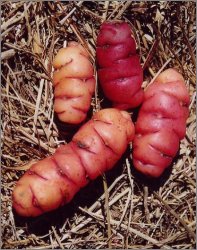
Oca can taste tangy (like a lemony potato) or sweet (like an apricot) depending on its variety.
|
What exactly is oca? It's a perennial plant whose tubers are similar to potatoes, only with wrinkles and very brightly colored in red, orange, yellow, purple and pink. Depending on the variety -- there are over 50 -- they have a flavor ranging from a lemony potato to a sweet chestnut (they're also sometimes described as "potatoes that don't need sour cream").
Unlike potatoes, oca can be eaten raw, but they're also delicious boiled, baked, steamed, stewed, grilled, fried or candied.
The Lost Food of the Incas
Oca is sometimes referred to as one of the "lost crops of the Incas," because, despite its potential to become a globally cultivated crop, it's still mostly enjoyed only in a few limited areas, namely South America, Mexico and New Zealand (where it's called the "New Zealand yam").
Thought to be one of the oldest crops of the Andean region (tubers were even found in early tombs in the area), the oca suffers unfairly from the stigma of a "poverty food," yet supplies a rich source of carbohydrates, calcium and iron (some high-protein varieties even contain more than 9 percent protein), not to mention great taste and versatility.
Consider these varied samplings of how the oca is prepared:
-
In Mexico, oca is often served raw with salt, lemon and hot pepper added
-
Oca can be pickled and made into bottled preserves
-
In the Andes, oca is dried in the sun, which makes it very sweet
-
Oca is often baked and stewed
|
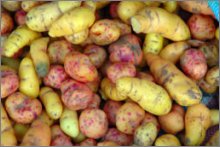
Watch out for oca's other names: ocha, the New Zealand yam, quiba, hibias, timbo, apilla and papa roja.
|
Where to Find Oca
You can grow your own oca if you're up for a challenge. It's an incredibly hearty plant (with very attractive leaves and flowers) that is harvested in the winter. Alternatively, you can keep a watch out for brightly colored tubers that resemble small, wrinkled carrots at specialty markets. If you spot them, you've found oca.
If you get your hands on some oca, try it prepared simply, such as baked or boiled like a potato, or if you're in the mood for something more authentic, try out this oca recipe from Peru.
Oca con Salsa Picante
Oca/Shrimp Mixture:
3 pounds oca tubers
1/4 cup cold dry white wine
1 pound fresh shrimp, shelled and deveined
1 tbsp flour (optional)
1 tbsp butter
1 tbsp olive oil
Salsa Dressing:
Coarsely puree the following; adjust seasonings to taste.
1/2 tsp salt
1 tsp sugar, or more to taste
2 cups chopped cilantro, leaves only
2 tbsp minced shallot
2 tsp minced garlic
2 tbsp finely chopped jalapeño pepper, or more
heat to taste
3 tbsp lime juice
7 tbsp olive oil
Method:
- Steam tubers in a tightly covered container over high heat for 20 to 25 minutes or until the oca is cooked "al dente."
- Remove from heat and pour into a large work bowl. Toss with cold wine and cover. Set aside to cool.
- While the oca is cooking, shell and devein the shrimp, then dust lightly with flour (optional).
- Heat the butter and olive oil in a large sauté pan and cook the shrimp until lightly golden.
- Remove from heat, lift out with a slotted spoon and combine with the steamed oca.
- Once the oca and shrimp cool to room temperature, add the dressing.
- Stir well and let stand for 10 minutes, then serve immediately.
Serves 6 to 8.
Recipe Source: Mother Earth News
Sources
Lost Crops of the Incas: Little-Known Plants of the Andes with Promise for Worldwide Cultivation
Mother Earth News
