Has the FDA Failed You?
BPA Still Lurking in Plastic Bottles and More
© 2012 Health Realizations, Inc.
For years now concerns surrounding a chemical called bisphenol-A (BPA), used in countless plastic food and beverage containers, have been growing. The chemical first made headlines for its potential ability to mimic the female hormone estrogen, impacting fertility and potentially promoting cancer.
The concern has lead to widespread fears that allowing the chemical in baby bottles and baby toys could harm the health of future generations.
Also alarming was a study published last year in the Journal of the American Medical Association (JAMA) that found BPA may also lead to heart disease, diabetes and liver problems in adults.
BPA is one of "the world's highest production-volume chemicals, with more than 2 million metric tons produced worldwide in 2003 and increase in demand of 6% to 10% annually," according to the JAMA report.
The chemical is so widely used, in fact, that almost everyone has the chemical in their body right now.
"Widespread and continuous exposure to BPA, primarily through food but also through drinking water, dental sealants, dermal exposure, and inhalation of household dusts, is evident from the presence of detectable levels of BPA in more than 90% of the US population" the researchers write in JAMA.
Yet when the U.S. Food and Drug Administration (FDA) released their draft assessment on the topic late last year, they concluded “that an adequate margin of safety exists for BPA at current levels of exposure from food contact uses.”
Why Did the FDA Say BPA is Safe?
After the FDA’s initial ruling, an FDA advisory board said the agency “ignored critical evidence” suggesting BPA could cause harm to children. More specifically, it was found the FDA based its decision that BPA is safe only on studies funded by the chemical industry, and excluded studies that suggest BPA could harm children at levels at least 10 times lower than what the FDA allows.
“It’s ironic FDA would choose to ignore dozens of studies funded by (the National Institutes of Health) -- this country’s best scientists -- and instead rely on flawed studies from industry,” Pete Myers, chief scientist for Environmental Health Sciences, told the AP, as reported by the Wall Street Journal.
|
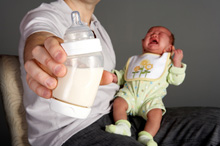
Health experts are worried that BPA in baby bottles and baby toys could harm the health of future generations.
|
In fact, the Environmental Working Group even says BPA could cause brain, behavior and prostate damage at levels 500 times lower than the FDA's proposed exposure limit.
"You cannot tell parents with a straight face that BPA is safe," Sonya Lunder, a scientist with the group, told USA Today. "As a parent, it's outrageous to think that another generation is going to be born and subjected to these toxic exposures while this process works itself out."
Common Ways You’re Likely Being Exposed to BPA -- and How to Avoid Them
BPA is commonn in plastic bottles (including baby bottles), but that is far from the only way you can be exposed. BPA is also widely used in:
-
Plastic gallon milk bottles
-
Plastic microwavable plates, ovenware, and utensils
-
Tooth sealants
-
Glasses
-
Food cans, soda cans, etc. (as most have plastic lining in the cans)
-
Baby toys, bottles, pacifiers, and sippy cups
BPA is so widely used that it may be nearly impossible to avoid exposure entirely; however you can greatly reduce your exposure by avoiding BPA-containing products as much as possible, including one of the biggest BPA predators: plastic water bottles.
Plastic containing BPA may be called:
-
Polycarbonate
-
Lexan
-
Polysulfone
Though it is generally clear, it can be tinted in various colors. Plastic that contains BPA carries the #7 recycling symbol, as well, so never use those bottles.
So how can you replace expensive and unhealthy bottled water with a safer, and many times less expensive solution? Get high-quality filtered water right in your own kitchen!
You can get the best of both worlds -- clean water and save money -- when you use a high-quality water kitchen filter for your home.
Look for one that with water filter that ideally reduces Chlorine, Chloramines, Cysts, VOCs, pesticides, and herbicides -- including DEET -- below detectable levels for the life of the filter.
So instead of buying bottled water, you can get superior water in your own kitchen. To take it on the go, simply fill up a glass bottle of your own and you're set with clean water -- without having to worry about BPA.
11 More Tips to Minimize Your BPA Exposure …
-
Bottling your own water (in glass or BPA-free plastic) from a Kitchen Filtration System.
-
Buying your own personal reusable water bottle made of HDPE (high density polyethylene) plastic, which is BPA-free!
-
Purchasing glass baby bottles instead of plastic.
-
Buying milk and juice in glass containers (NOT plastic).
-
Using baby bottles and sippy cups made of polyethylene plastic (#1, #2, #4 recycling symbols) or polypropylene (#5) (these are usually colored, not clear)
-
Replacing plastic food and drink containers and utensils with glass, ceramic or metal varieties.
-
Not using canned foods (as they mostly have plastic linings) or foods wrapped in plastic.
-
Avoiding soda cans (as they mostly have plastic lining). If you drink soda, choose the glass bottles instead.
-
Not letting children put plastic toys in their mouths, or giving them natural fabric toys instead of plastic ones.
-
Being careful with BPA-containing plastics, if you choose to use them. This means not exposing them to heat (microwave, dishwasher) or harsh detergents (bleach, etc.), throwing them away if they're scratched or worn, and not letting food or beverages sit in the containers for too long -- all of which increases the amount of BPA that may leach into your food.
-
Dental sealant may leach BPA. Although this is being debated, you may want to avoid dental sealants on your children's baby teeth, or ask your dentist if the sealant is BPA-free.
Sources
Journal of the American Medical Association; 300(11):1303-1310
USAToday.com
Wall Street Journal Health Blog
